

Maebongsan Mountain
A Historic Walking Trail


Introduction

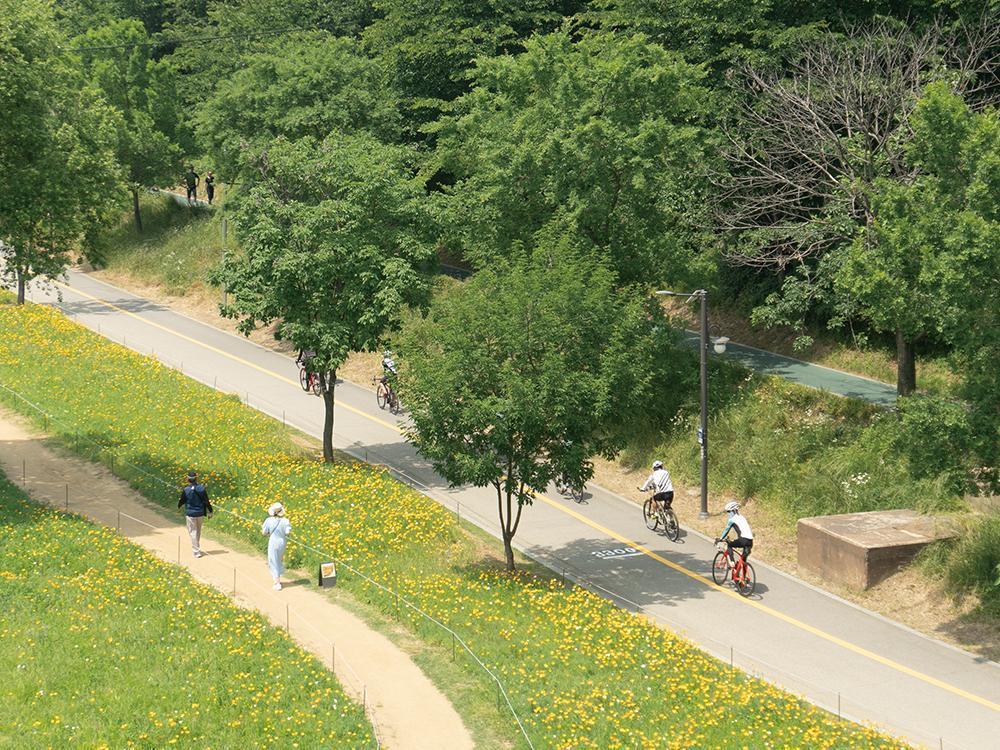
Standing about 100 meters tall in Dogok-dong, this mountain was once called Dokguri-san for the abundance of stones at its base — the origin of the Dogok-dong name. Though modest in scale, its forests are remarkably lush, home to wildlife and various songbirds. The trails are so well-maintained that hiking boots aren't necessary. A ridge path runs east to west, and a circumference trail wraps around the mountainside. The Gangnam area has been a center of Korean prehistoric culture along the Han River from the Bronze Age, and Maebongsan bears traces of that heritage. Near the Dogok mineral spring on the mountain's south side lies a settlement dating to the 7th–4th century BC, identified as a Bronze Age pit dwelling site. On the western slope sits a mountain shrine where locals once offered rituals to the mountain spirit, marked with a stone inscribed 'Dokguri Mountain Shrine.' Still cherished by longtime residents, it remains a beloved neighborhood landmark. An old footpath runs between present-day Maljukgeori and Maebongsan — countless scholars once traveled this route to and from Hanyang (old Seoul), giving the mountain's walking paths a rich historical pedigree.
Curation Details
| Item | Description |
|---|---|
| Maebongsan in Dogok-dong, 100m ASL | A roughly 100-meter-tall mountain in Dogok-dong. It was once called 'Dokgurisan' due to the many rocks at its foot. |
| Origin of Dogok-dong's Name | The old name 'Dokgurisan' became the origin of the place name Dogok-dong. |
| Ridge Trail + Dulle-gil | A well-maintained walking course with an east-west ridge trail and a dulle-gil (loop trail) circling the mountain's midsection. |
| Yeoksam Bronze Age Pit Dwelling Site | Near the Dogok Spring on the south slope lies the 'Yeoksam Bronze Age Pit Dwelling Site,' home to Bronze-Age people from the 7th–4th centuries BC. |
| Dokguri Sanjedang | A marker remains on the western slope for 'Dokguri Sanjedang,' where indigenous inhabitants once held rites to the mountain god. |
Explore Green Healing in Gangnam


Customer Support
FAQ
Subway Line 3 Maebong Station or Bundang Line Dogok Station. Address: San 32-6, Dogok-dong, Gangnam-gu, Seoul.
Light picnicking is available in outdoor areas. Bringing a blanket and snacks is recommended.
Building Soom (Winner of the First Prize in the 10th Exhibition), Uuum Free-From Eatery & Bakery, Citron are nearby.
